
Daily Note
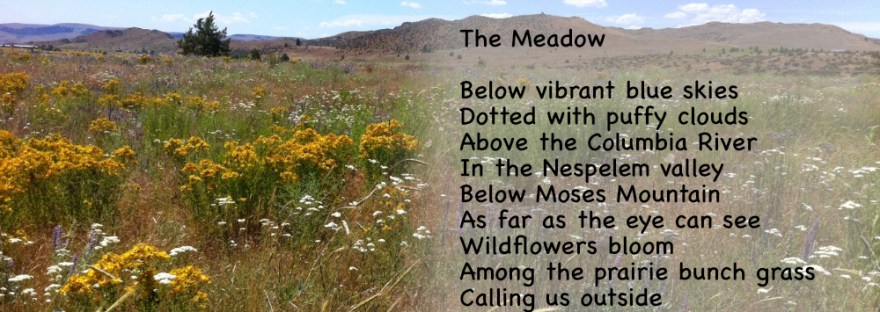
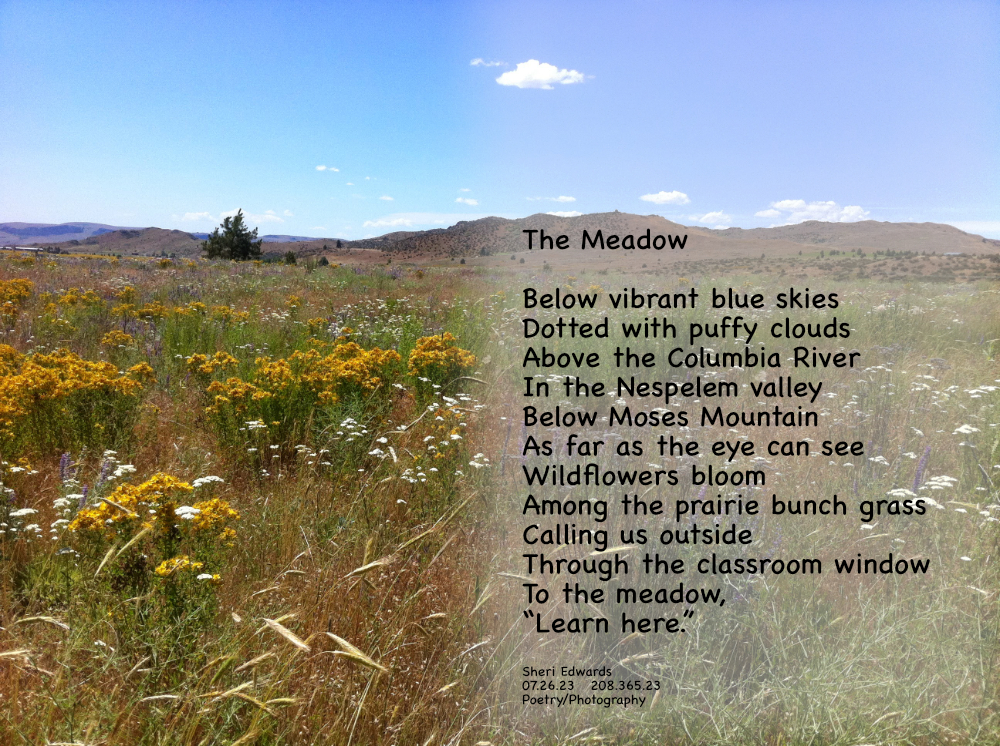
Every day, a photograph, a poem. I love it when this photo shows up as a pop up memory on my iPad. I took the photo years ago outside my classroom window— probably with a small digital camera. Remember those? Before iPhones?
The meadow called to us— to take a quick break outside for short game or paper airplane contest. In the autumn, it was the cool breeze swirling seeds through the air. In winter, a snowfall called us. In spring, the sunshine sang, “Listen to the birds sing and the bees buzz.” We often took “Walk n Talks” to discuss a topic we were studying, a chance to move and breathe fresh air while still staying focused on our requirements. It was a place for each of us to look when troubles clouded thoughts, a respite from the worries of the day, a chance to calm and refocus. How fortunate we were to have the beauty of nature surrounding us.
How important is nature? With the changes in climate affecting all of us, we appreciate it’s wonder and beauty and relevance to each of us as we also worry about its processes that harm us, such as tornadoes, hurricanes, heat domes.
Here in eastern Washington, we have much to be thankful for in this semi-arid shrub-steppe ecosystem. The wildflowers and animals are visible in this rural area, often even showing up in the larger cities. Actually, in any area of neglect in a city, the wildflowers seeds will flourish again through the cracks in the sidewalk and vacant lots. Wildlife will wander where food is. The shrub-steppe will find a way. Visit the Burke Museum online to identify what you see.
In the meadow above you see bunchgrass, lupine, yarrow, orange globe mallow, and more. Think of the insects to study and food web. What foods were available here five hundred years ago? Plenty: salmon, huckleberries, elderberries, camas, licorice, and so much more. [Spokesman: What Could You Eat 500 Years Ago in PNW] Consider native foods. Science, History, Health— all outside in the meadow.
Perhaps none has so eloquently or so urgently articulated the need for this kind of learning better than Richard Louv is his book, “Last Child in the Woods.”
“Passion is lifted from the earth itself by the muddy hands of the young; it travels along grass-stained sleeves to the heart,” he wrote. “If we are going to save environmentalism and the environment, we must also save an endangered indicator species: the child in nature.”
By Ammi Midstokke For The Spokesman-Review
Quoting from the Richard Louv book, “Last Child in the Woods.”
For information of how nature education helps a community, read about the Child / Nature Movement. Our local schools get outside and even help add to nature with “seed bombs.” [The Star Newspaper: Citizen Science Seed Bombs]
And so, a poem…
Poetry
The Meadow
Below vibrant blue skies
Sheri Edwards
Dotted with puffy clouds
Above the Columbia River
In the Nespelem valley
Below Moses Mountain
As far as the eye can see
Wildflowers bloom
Among the prairie bunch grass
Calling us outside
Through the classroom window
To the meadow,
“Learn here.”
07.26.23 208.365.23
Poetry/Photography [See-Frame-Focus]
#clmooc #smallpoems #poetry23 #nespelem #nespelemvalley #meadow #wildflowers

 I wonder, if I draw a line...