



Verbascum thapsus, the great mullein
A Little Note
The Photos:
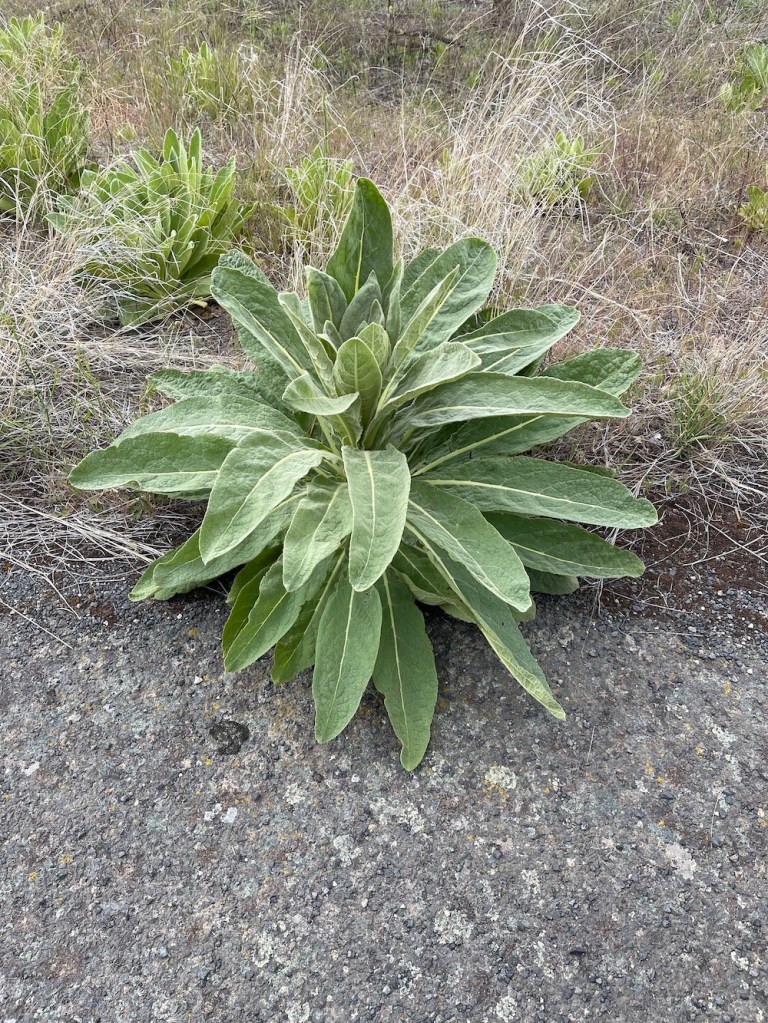
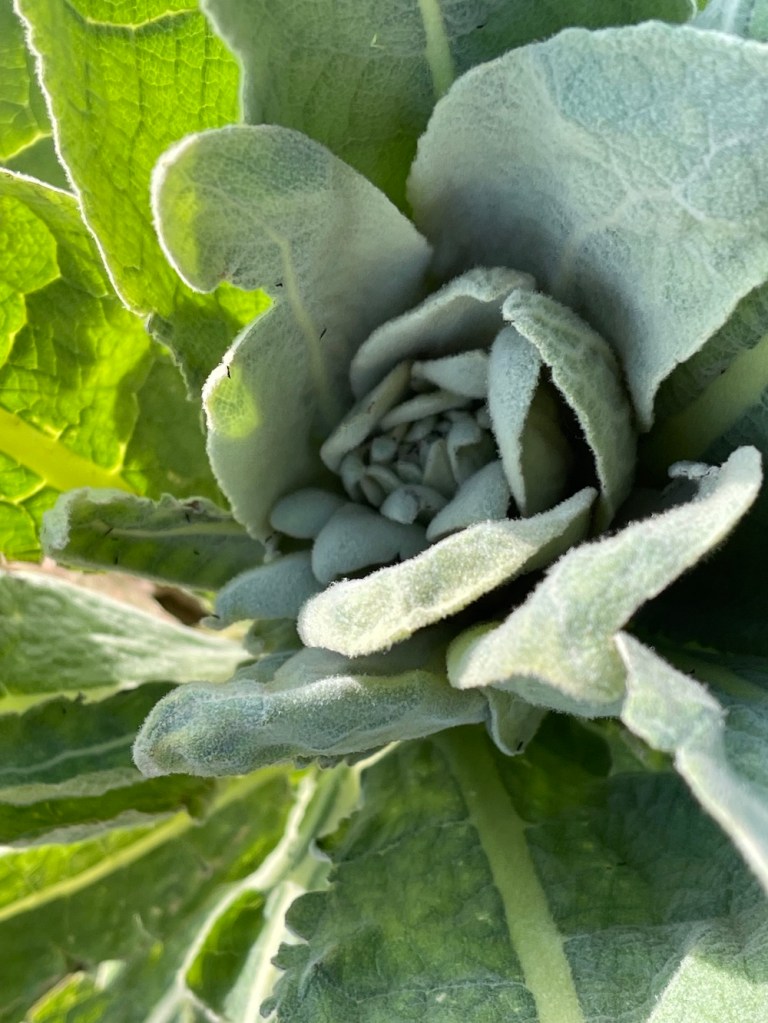
Rosette:
common mullein in its first year
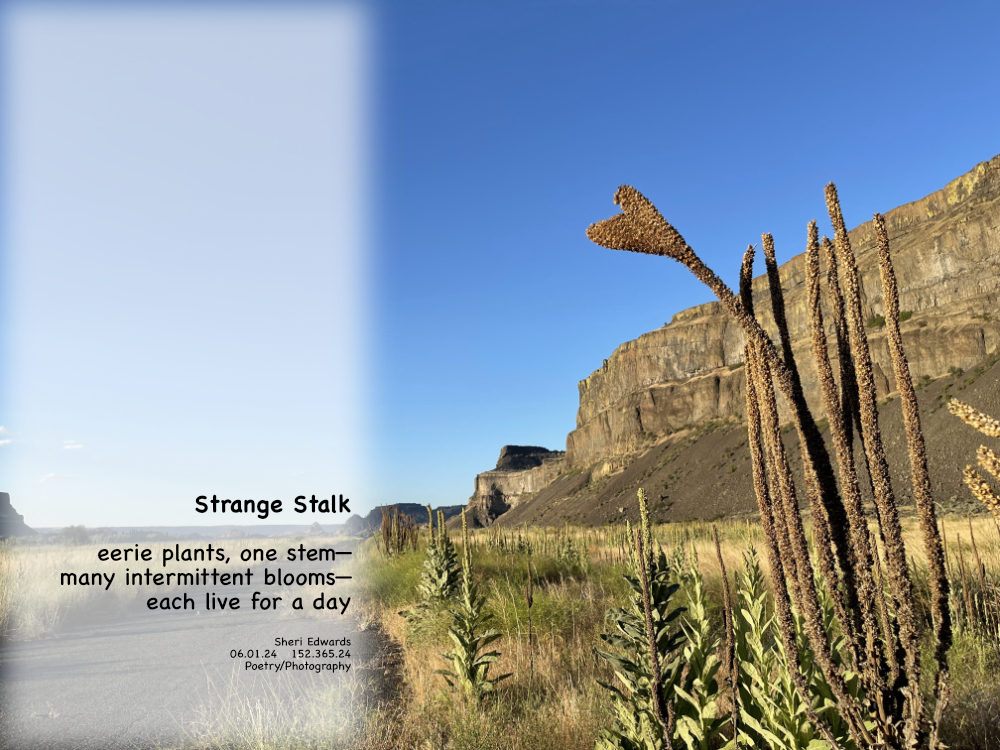
Stalk:
common mullein in it’s second year; the the seeds have fallen, the blooms have died and so will the plant.
The Thought:
Verbascum thapsus, the great mullein
My husband always called these Indian Spears because the dead stalks can be picked up and thrown like a spear. But the plant is common mullein, from Eurasia.
Mullein was cultivated in the United States for medicinal purposes in the 1800s and has now spread across most of North America.
The plant is a biennial; the first year it is a rosette and is the best time to just pull it up to get rid of it.
The second year a tall stalk grows with hundreds of yellow blossoms that start blooming at the lower end, for only a day. They self-pollinate if the bees don’t. After a day, they die.
Because the blooms are sporadic, the plant looks quite scraggly. But in each bloom are many seeds, and a large plant can have over 180,000 seeds that stay viable for one hundred years.
The stalks have been used as torches.
Many insects feed on these plants — both harmful and beneficial ones, but most animals don’t like the plant because of the hairs on leaves and stems.
It is considered an invasive weed, but can be controlled.
Resources
Poetry
Strange Stalk
eerie plants, one stem—
many intermittent blooms—
each live for a day
Sheri Edwards
06.01.24 152.365.24
Poetry/Photography
#smallpoems #clmooc #poetry24 #poetry #mullein #weed #wildflower

 I wonder, if I draw a line...