

Sleepless? A Cure…?
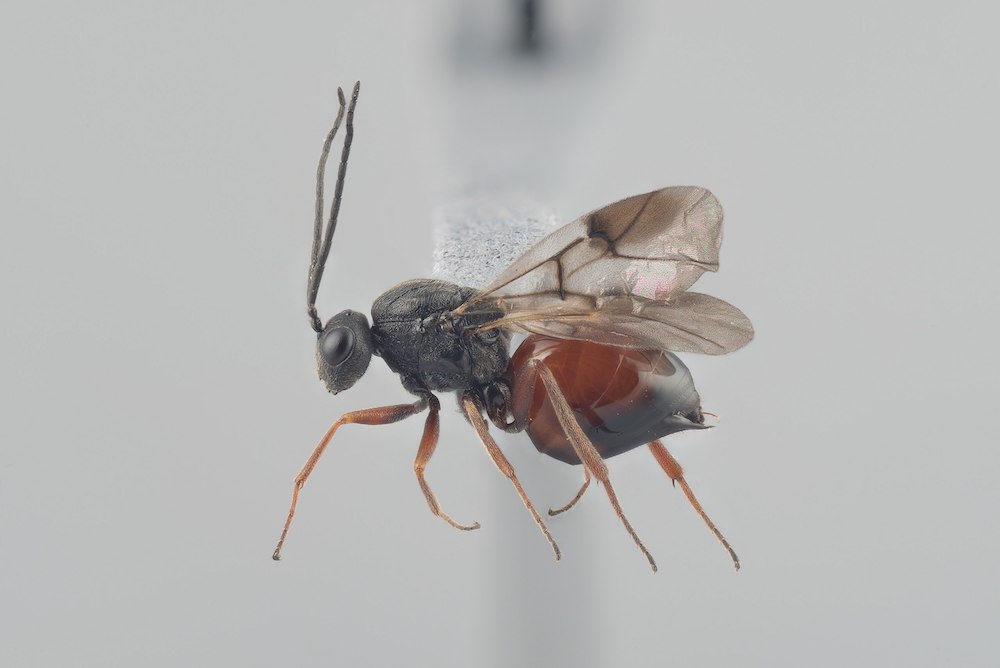
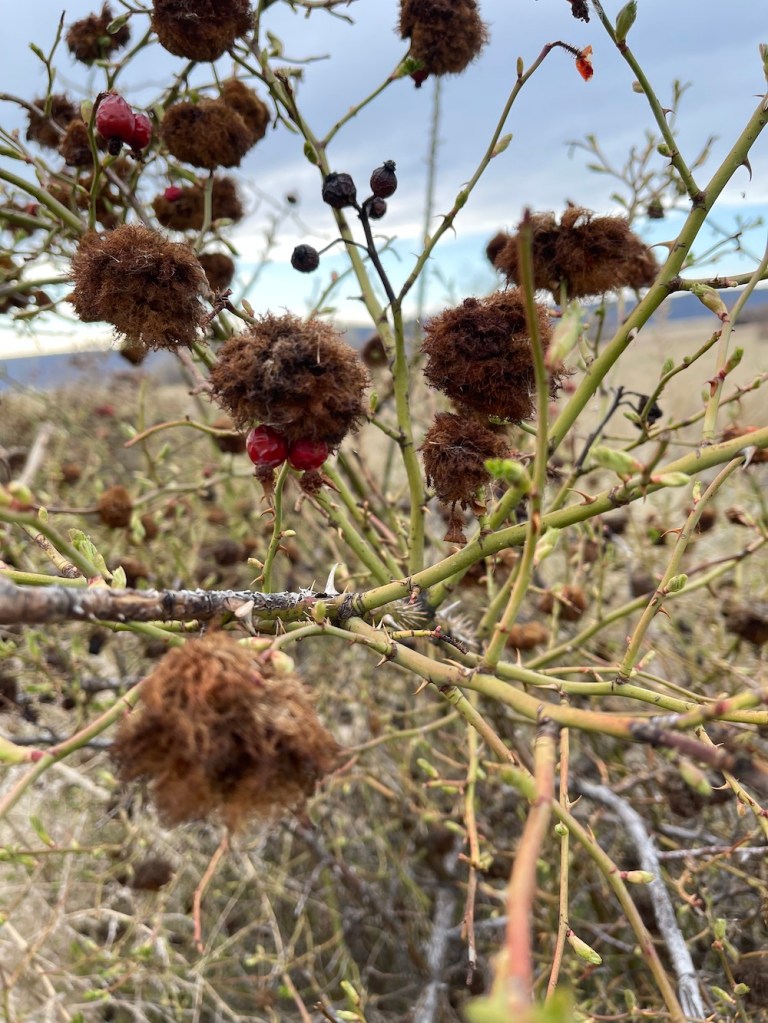
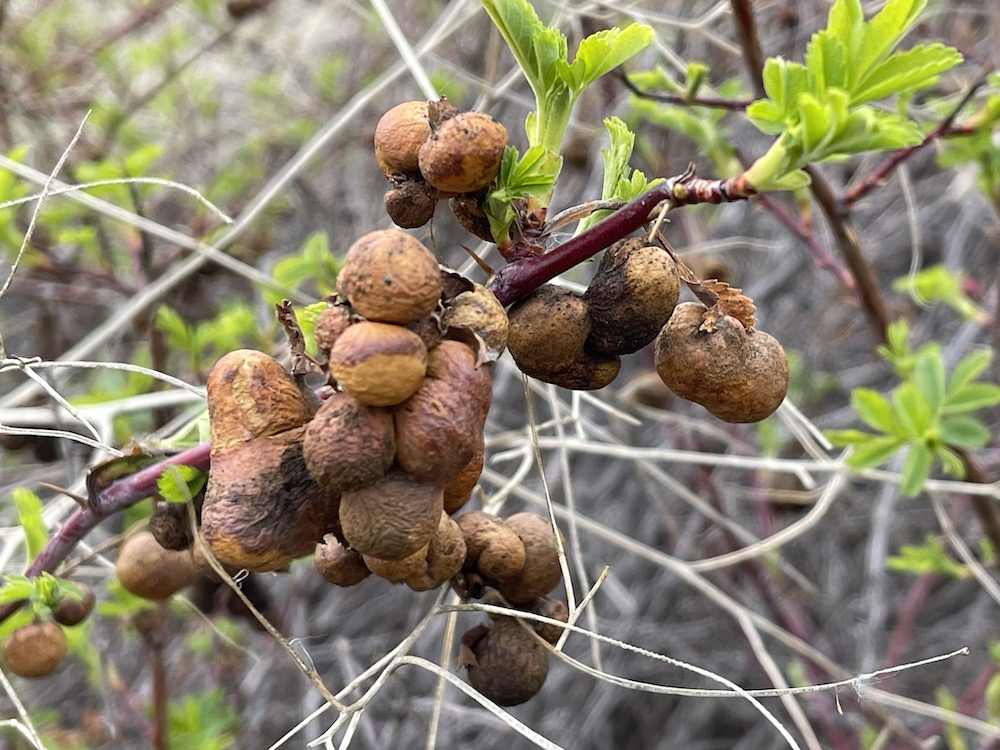
This is a mossy wasp gall, a growth on the rose bush. A Diplolepis rosae wasp, a tiny wasp we barely notice, secretes a chemical at the leaf node and lays its eggs. The plant responds to protect itself with these leafy balls that become nutrients to the larvae from the hatched eggs the wasp lays on the leaf node as the gall grows around them.
Folklore says putting a wasp gall below your pillow will induce sleep. LOL! How about nightmares? I do not recommend it!
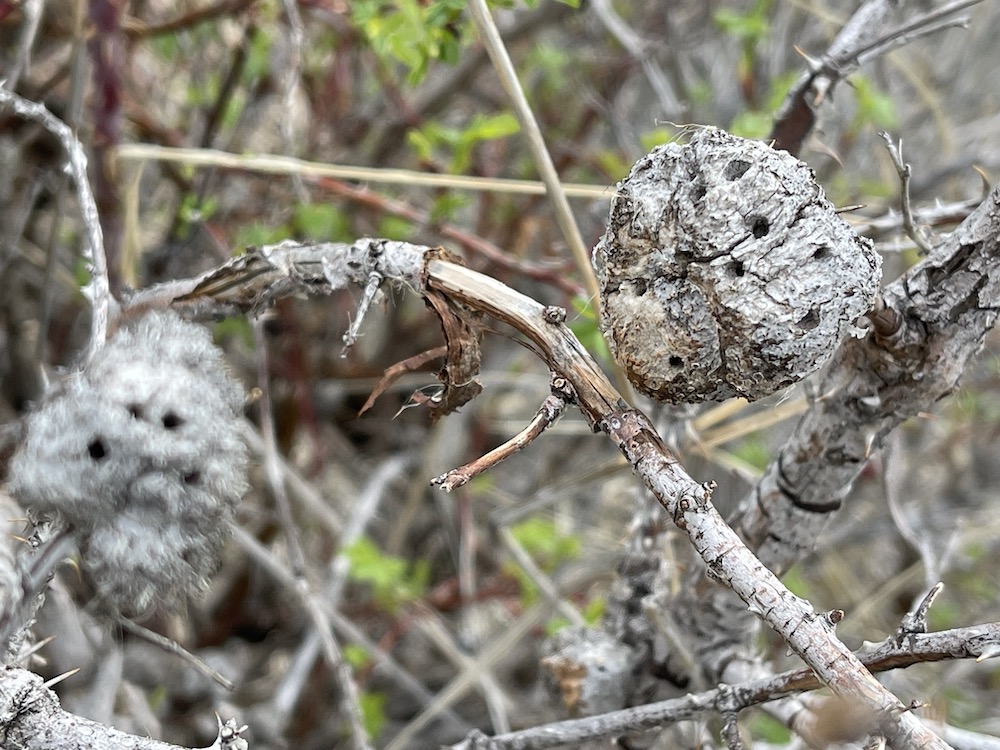
From May through August the wasps will emerge from the gall after spending a winter growing. Birds will often peck through the galls to eat the larvae. Since the gall is protein, small animals will also eat them when they fall off. The rose bush is usually not harmed by the galls, but the rose is usually stressed when galls form [such as lack of water in our area].
Rose Galls through the Year


Poetry from Nature
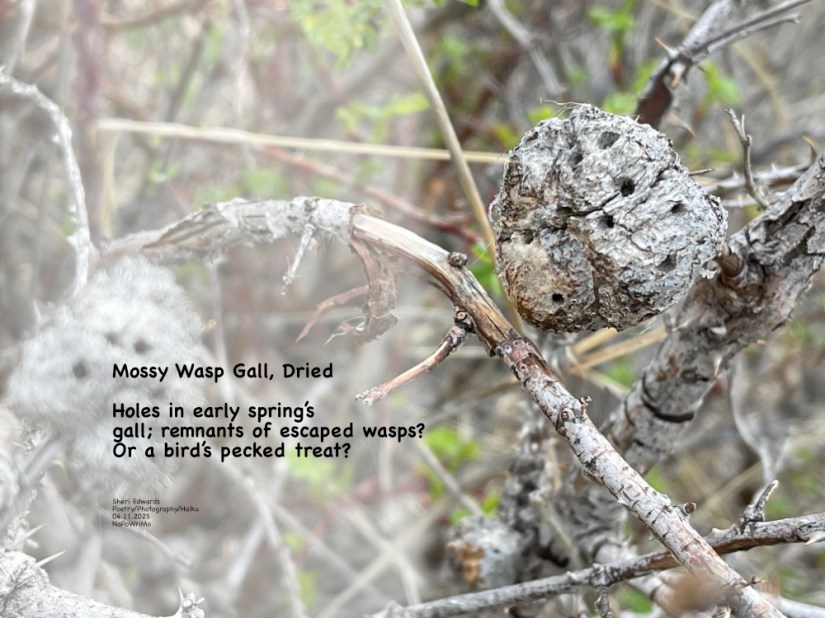
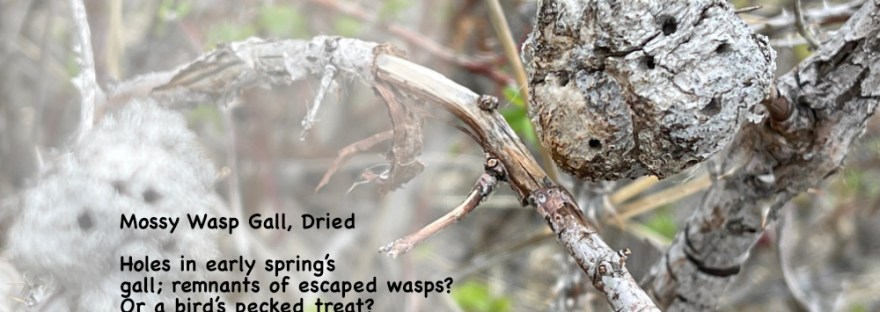
Mossy Wasp Gall, Dried
Holes in early spring’s
Sheri Edwards
gall; remnants of escaped wasps?
Or a bird’s pecked treat?
Poetry/Photography/Haiku
04.11.2025
NaPoWriMo
I imagine one could tell from the shape of the hole in the gall whether something crawled out from the inside or something was pecked out.
Sources:
- iNaturalist: The Mossy Rose Gall
- iNaturalist: Browse Photos of Wasp, Birds, and Gall
- Wikipedia: Diplolepis rosae, the wasp
- Blog: That Took a Lot of Gall
- Blog: Galls on Sagebrush

 I wonder, if I draw a line...