
Black Cottonwood
By the water
in the spring
when blackbirds
return to singOn cottonwoods
near the lake’s shore
“balsam” buds sprout
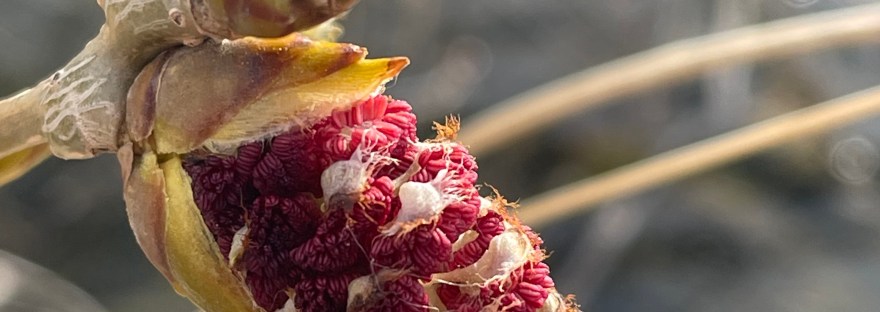
catkins galorevelvety red male—
with pollen released
and round green catkins
free its cottony seedsseeds on the wind
float gently away
while heart-shaped
leaves turn and swayThe tall cottonwood
Sheri Edwards
from a distance appears
calling to travelers
the water is here.
National Poetry Month
4/5/26
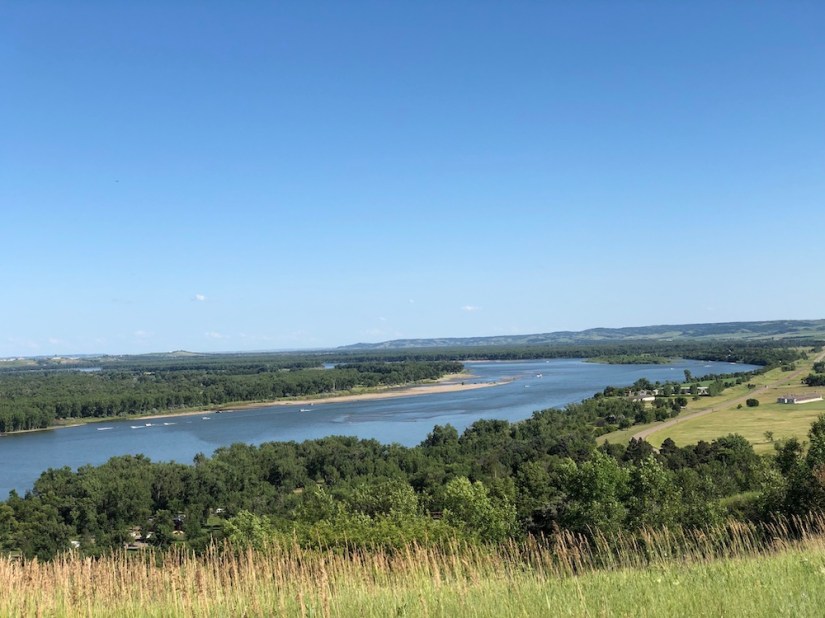
One of my favorite trees is the cottonwood. I’ve written about it here and here. It’s part of my early history of my childhood where we fished along the banks of the Missouri River near Bismarck where the cottonwoods once flourished.
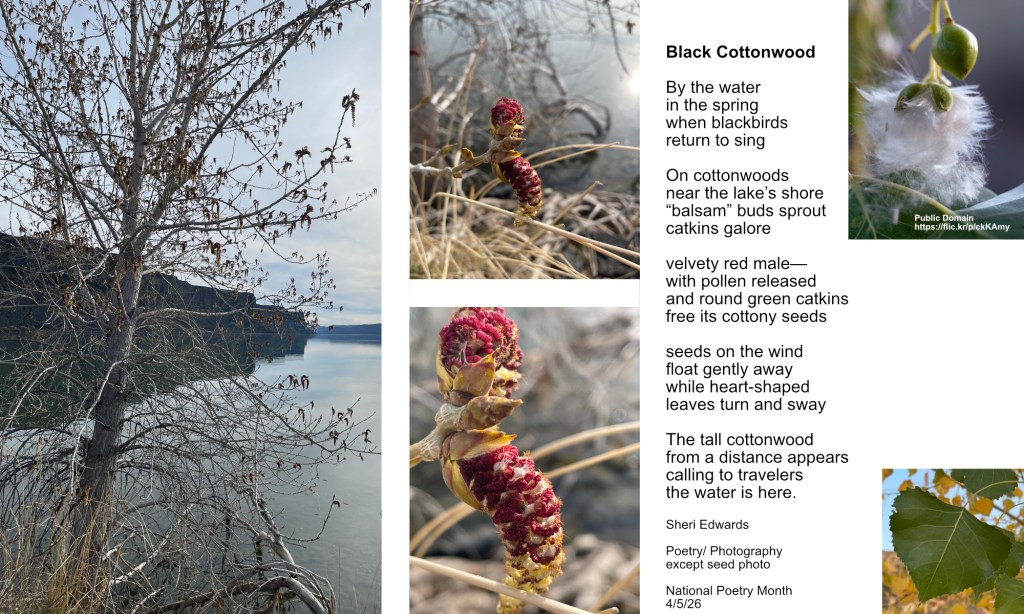
Today I took the pictures to the left of the poem in the image, a place on Banks Lake where we walk the dog. I had not walked there in the early spring before, but the temperature today was almost 70° F — way too hot for April– so we ventured out. I was amazed at the catkins all over the tree where no leaves are yet showing. When I returned home, I researched the catkins for this poem.
Resources:
- Be sure to check out the linked posts above: lots of resources and photos there, if they haven’t disappeared
- Forest Service: the Forest Service provides many resources; of course they will all disappear as the current administration is dismantling the forest service for their own plunder.
- Wikipedia: Wikipedia may be the last available online resource; be sure to donate. Wikipedia is the Internet we were promised.
Cottonwood Historical Importance / Droughts
There is one thing I remember most about the cottonwood tree, especially coming from North Dakota and eastern Washington State where droughts often occur. That one thing is that travelers of the past would look for the cottonwood tree, because wherever there is a cottonwood tree, water is nearby.
I’ve thought about that today since our area is currently experiencing extremely dry conditions.
Research your county for “drought conditions;” we’ve been warned in Okanogan County, Douglas County, and Grant County. We now name our seasons, fall, winter, spring, and fire.
Take a look here for conditions near you: Drought.gov

 I wonder, if I draw a line...