

Photo Memory
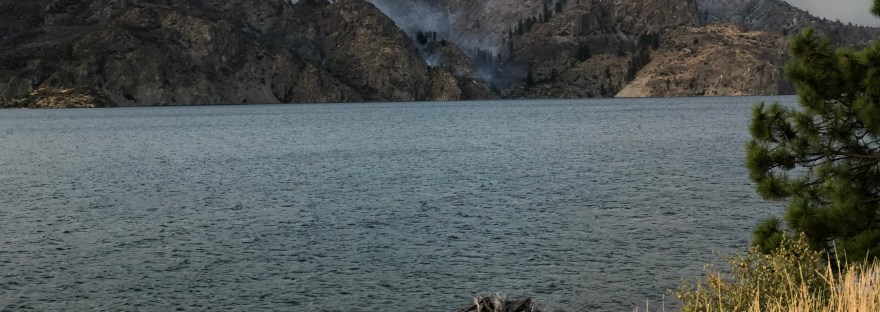
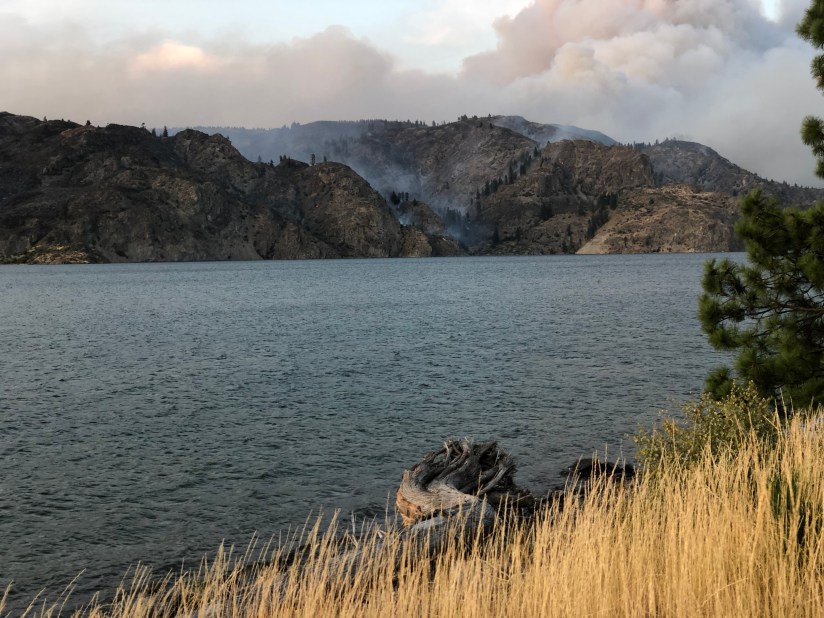
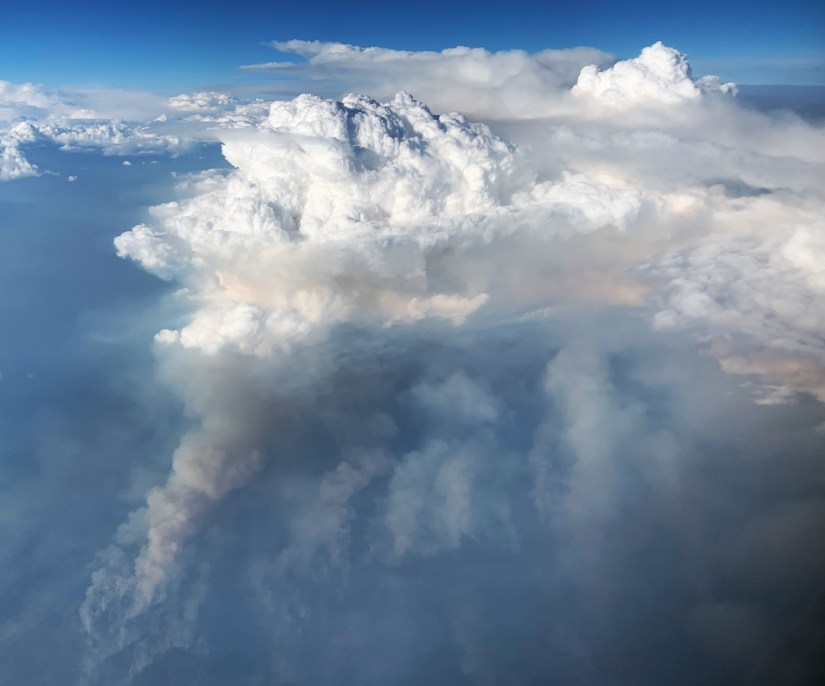
The lock screen on my iPhone chose the photo above today. I remember that pine tree on the right– a lone pine on the Lincoln side of the river near the water. Across Lake Roosevelt is the Colville Reservation, home of the Confederated Tribes of the Colville Reservation. I remember that smoke and the pyrocumulonimbus cloud, formed from the intense heat of the wildfire, creating deep, smoke-infused thunderstorms.
Williams Flats Fire 2019
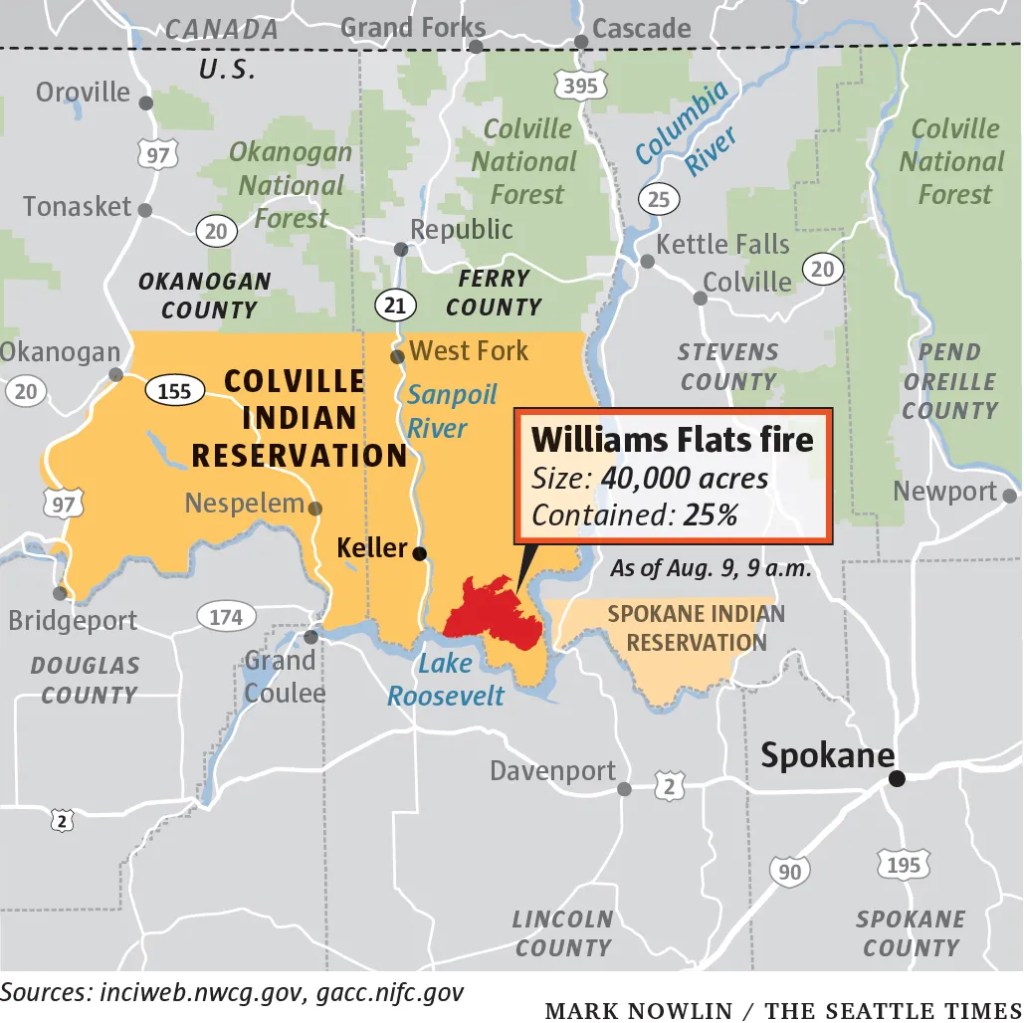
That fire was the Williams Flats fire started in early August by thunderstorms / lightning strikes and was not contained until August 25th at 44,446 acres. It spread due to weather, fuel, and terrain and was considered a huge fire at that time — and it’s only ONE THIRD of EACH of the three largest fires now burning in Washington State. Today’s fires are spreading hotter and faster than previous years.
The GOES West satellite caught the formation of the pyrocumulonimbus cloud from the Williams Flats fire here [click to see video]. The Geostationary Operational Environmental Satellites is the advanced geostationary weather satellites for the Western Hemisphere and “provides critical atmospheric, hydrologic, oceanic, climatic, solar and space data” to detect and observe environmental phenomena for the protection and safety of people, property, and economies.
Then, Flooding
Once the fire is contained, the next danger is flooding. One to two inches of rain fell at the end of the Williams Flats fire, with only burned land that turned to mud and could not slow the flow. Sixty-four firefighters were stranded due to the flash flooding, but were found and returned safely back. We’re expecting rain on Wednesday and Thursday.
Size of Current Fires in Washington Forests near us:
- Sinlahekin Fire: 148,689.6 acres; 42% contained; started July 26, 2026
- Kaiser Canyon Fire: 138,210 acres; 69% contained; started July 16, 2026
- Little Giant Fire: 122,401 acres; 2% contained; started July 16, 2026
We are thankful for the firefighting resources available, and the men and women who serve to protect our life and property. Several have lost their lives during these current fires across the United States.
But, there are far fewer resources available for these much larger fires:
The National Federation of Federal Employees (NFFE-IAM) sent a press release on August 6– a request to reverse the illegal reorganization of the US Forest Service so the service may be adequately staffed and able to support the federal wildfire fighting workforce. DOGE cut more than 6,000 USFS workers, and the administration wants to close 57 of 77 research facilities.
What are we doing, America?
Fund for Kaiser Canyon Fire Residents
Note: If you’d like to help the people of the Colville Confederated Tribes who have lost homes in which generations of children grew up, you can donate to the official tribal recover fund–go to the Cedar Fund Wildfire Recovery Campaign on Zeffy.
Sources
- The National Federation of Federal Employees (NFFE-IAM)
- Geostationary Operational Environmental Satellites
- Inciweb Wildfire Incidents
- National Weather Service / Spokane on X
- Krem News August 25, 2019
- Facebook: GOES-R
- US Naval Research Laboratory– Williams Flats Fire
- Seattle Times August 7 2019 Williams Flats Fire
Climate Change? It’s all around us.
In our area, we now call the summer season, Fire Season, and it is caused by climate change.
Some information:
A 2016 study found climate change enhanced the drying of organic matter and doubled the number of large fires between 1984 and 2015offsite link in the western United States. A 2021 study supported by NOAA concluded that climate change has been the main driver of the increase in fire weatheroffsite link in the western United States.
NOAA
Climate change-driven droughts and extreme heat events increase the drying of organic matter in forests, the material that burns and spreads wildfire. Compared with 35 years ago, fire seasons are a month longer in parts of the United States, starting earlier and ending later. Additionally, between 2001 and 2020, the average peak wildfire growth rate in the United States nearly doubled.
CENTER FOR CLIMATE AND ENERGY SOLUTIONS
Europe is also fending with extremely dry and hot weather creating fires across Spain and France. This article in the Guardian explains the effects of climate change on the world: ‘Extremely scary findings’ show climate crisis is supercharging Europe’s wildfire weather.
It’s time the United States takes climate change seriously again. Don’t you think? Wildfires are progressively larger each year– the smoke itself spreads across the continent, affecting everyone. So yes:
It’s time the United States takes climate change seriously again.

 I wonder, if I draw a line...